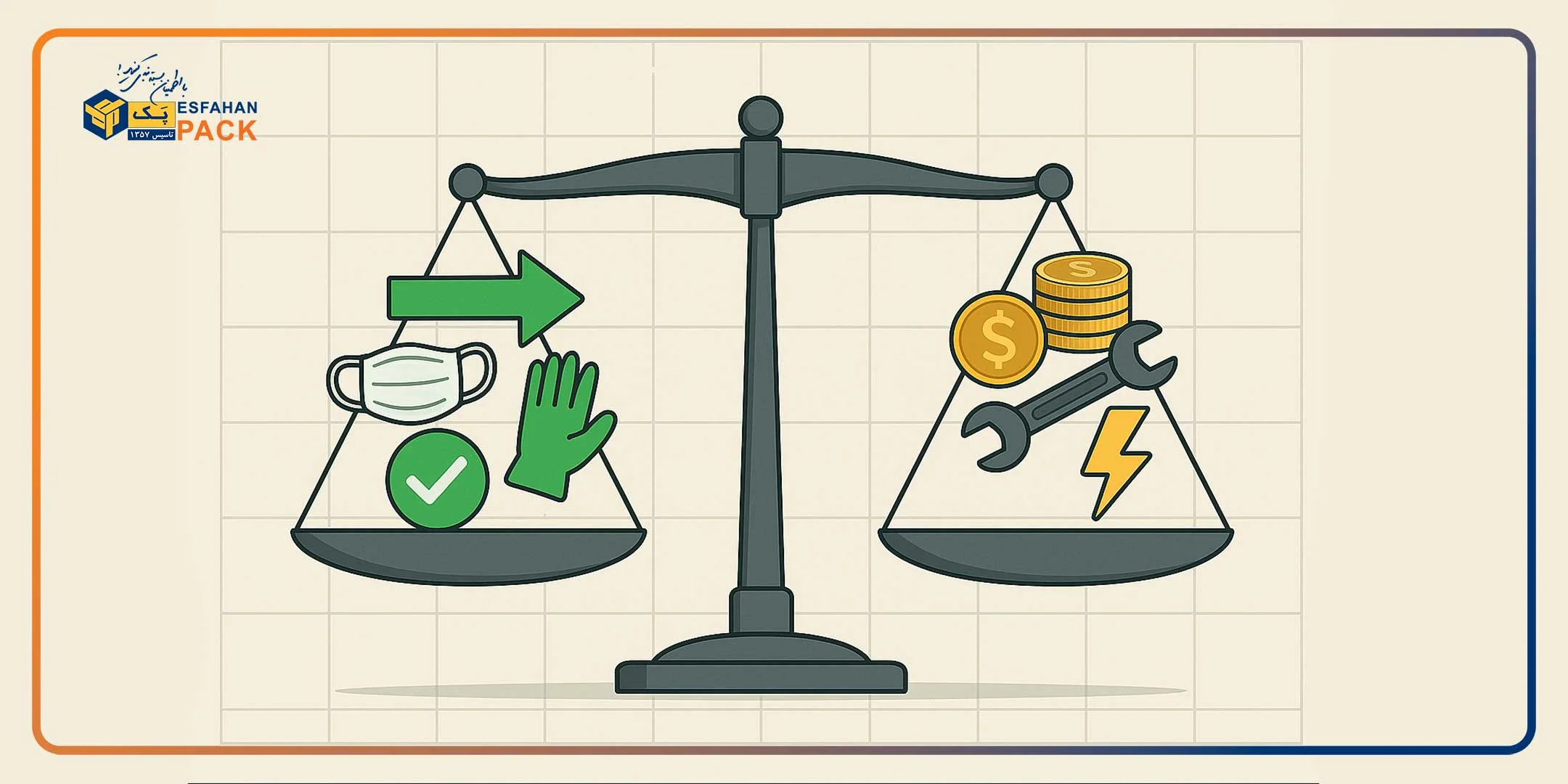
Packaging equipment can improve consistency, throughput and product protection, but it also brings capital and operating costs. This guide weighs the advantages and disadvantages of packaging machines so manufacturers can choose equipment that matches their products and actual production needs.
Why packaging equipment matters
In a coordinated packaging line, conveying, weighing or filling, wrapping and quality checks work together. Compared with a manual process, a suitable machine can reduce repetitive handling and improve consistency. The result depends on the product, material, settings and maintenance.

Advantages of packaging machines
- Higher throughput: repeatable cycles help plan output and reduce bottlenecks when the rest of the line can keep up.
- Less error and waste: correctly adjusted controls can reduce inconsistent seals, film wrinkles and rejected packs.
- More controlled handling: reducing direct handling may support hygiene, although a machine alone does not guarantee food or pharmaceutical compliance.
- Product protection: a suitable pack can help protect against dust, moisture or handling damage. Shelf life depends on the product and the complete validated packaging system.
- Potential long-term savings: lower rework and better control of film and labour can offset some investment costs.
- A consistent presentation: even seals and controlled film tension can improve the appearance of finished packs.

Disadvantages and operating challenges
Purchase, installation and integration require capital; buying more capacity than needed ties up money. Motors, sensors and mechanical parts need cleaning, inspection and preventive maintenance. Power interruptions or control faults may stop the line, while special spare parts and qualified repairs can extend downtime. Operators also need training and documented settings for each product.
Automatic or semi-automatic?
Automatic packaging equipment generally suits repeatable, high-volume production and reduces routine intervention. Semi-automatic machines often need more operator involvement but can be appropriate for smaller operations or varied products. Compare real output, shifts, changeovers, available space and budget rather than choosing by nominal speed alone.
Calculate the business case
Estimate the total cost of ownership: purchase, installation, energy, film, maintenance, labour and downtime. Compare these with achievable savings in rejects and handling and with additional saleable output. Payback varies with working hours, demand, materials and actual operation; there is no universal return period.
How to choose packaging machinery
- Define product size, weight, sensitivity and required output per shift.
- Check the film or packaging material and its compatibility with the machine.
- Review space, utilities, upstream and downstream equipment and future expansion.
- Confirm operator training, spare-parts availability and support before purchase.
- For palletized goods, assess a pallet stretch wrapper or palletizer where appropriate.
Frequently asked questions
Can a small workshop justify a packaging machine?
It can, if the equipment and cost match its output. A semi-automatic model may be a practical starting point.
Can one machine handle several products?
Sometimes. Confirm the allowed product dimensions, material and changeover settings with the manufacturer.
What support matters after purchase?
Clarify installation, training, maintenance, warranty terms and access to spare parts for the intended market.